Clare R. Baltazar – Filipino Scientist

Clare R. Baltazar- Filipino Scientist


Dr. Baltazar has consistently maintained outstandingly high standards of achievement throughout her academic life. Her numerous publications on Philippine insects especially on the Philippine Hymenoptera are very significant to science for they lay the groundwork for future biological control in the Philippines. Her book Philippine Insects is the first authoritative text on Philippine insects. Other important contributions of Dr. Baltazar to science are the discoveries of 8 and one subgenus of Hymenoptera and 108 new species of the Philippine parasitic wasps.


For these achievement, Dr. Baltazar is well recognized here and abroad. In 1980, she received the Rizal Pro Patria Award in entomology.

source: Directory of academicians and outstanding young scientists

Watermelon Production -Pakwan Business

Watermelon Production -Pakwan Business

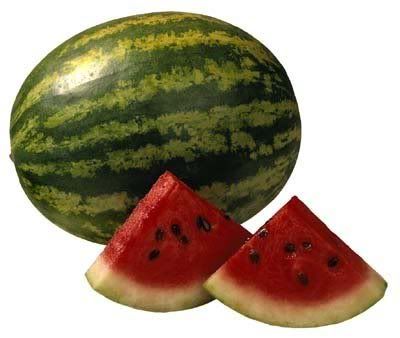
Watermelon, commonly known as “pakwan” in Tagalog, is probably native to Africa. It is mainly eaten as dessert fruit. The rind is made into preserves and pickles; the seeds are processed into butong pakwan. In 1982-83, the area planted to watermelon was 15,410 hectares with a total production of 75,650 metric tons of fruits; but area was reduced to 5,370 hectares in 1983-1984 and production went down to 57,000 metric tons of fruits. The demand for watermelon could go up as foreign markets like the USA offered to buy all the watermelon the country can produce.

VARIETIES

Varieties commonly grown in the Philippines are Valencia, Meak, Klondyke, northern Hybrid, Tender Sweet, honey Cream and Mallorca. Foreign varieties Accessions 193490 and 293964 from Africa; Accessions 183217 and 164539 from India; Festival Queen, Glory, Charleston Gray and Sugar Baby. Elevation – Watermelon is grown commercially in lowland areas after rice harvest. These provinces are Bataan, Bulacan, Pampanga, Tarlac, NUeva Ecija, Rizal, Batangas and Laguna. Months of planting – Planting season is from October to january. In some parts of the country, planting is done as early as August to produce an off-season crop which commands better market price. Continue reading “Watermelon Production -Pakwan Business”

Luffa Production – Luffa Business

PATOLA / LUFFA

Patola is a vegetable that is normally found in the market. It is usually used with miswa or chopseuy. But its usefulness does not ends there. It can be processed to become luffa. Yes, luffa, the one that we used to get rid of that dead cells in our body.

Patola as sponge has long been known in this country, but abroad, they are just beginning to know its use, and have learned to like it. Patola is sewn on a piece of cloth that serves as a handle for rubbing. Because of this, luffa or matured patola is in demand abroad, but we cannot meet this demand. Australia ask for a million pieces, to be sold in drug stores and department stores as sponge, 30×6 cm sizes. This is flat, but expands when put in water. The U.S get supply from Korea (form where luffa is supplied by a certain “Luffa King” because of his extensive luffa plantation for the purpose), by Japan, China and some other countries. In France, they like luffa as a natural beautifier cleanser. In Germany, their import of luffa is as natural as DM 1.83 million from Egypt, Greece, Japan, Cuba, USA, Tinisia, France, Netherlands, Italy, Great Britain and Lebanon. Thus, if we can produce enough patola for export, it will mean bringing in dollars to our country, without much competition.

MANNER OF PREPARATION

1.Let the patola grow mature before harvesting or buy mature patola.

2. Remove the peel and shake of the seeds. It could be easier to clean this by boiling first, but this will diminish the coarseness for rubbing. Continue reading “Luffa Production – Luffa Business”

How to make a brick?

Clay Bricks

Bricks have been around since time in memorial. The great wall was made of bricks. The Empire state building is also made of bricks. Bricks is a sturdy cheap material to use. Now a days bricks is used in gardens, streets and walls. Here is a simple article on how to make a brick.

Materials:

clay, sand, water

Tools:

shovel, hoe, pickax

strainer, wire #14

wooden scraper

wooden molds 10″ x5″ x12½”

gas oven Continue reading “How to make a brick?”