How to become a Billionaire?

How to become a Billionaire?

We all want to become rich and famous. We dream that some day we could have a nice vacation around the world. A Jaguar, Ferrari, Lamborghini, and Mercedes in our garage. Our very own private jet and a personal island in the Carribean. Continue reading “How to become a Billionaire?”

Peanut Production – Mani Business

PEANUT PRODUCTION

Technical Description
Peanut (anachis hypogea L.), locally known as “mani”, is a protein-rich and oil-laden legume. It is one of the oldest crop grown in the Philippines, but it has remained as a corn intercrop and has not gained prominence as a cash crop. It helps reduce risk of heart disease and cancer. Peanut contains high quality protein (25-30%) and oil (46-50%) protein content of 1 kg. Peanut is equivalent to that of a kilogram of pork and exceeds that of an egg, and meat from fowl and beef.

Peanut is ideal as a food ingredient because of its aroma, flavor, crunchy texture, and high energy value. It requires less nitrogen fertilizer because of its nitrogen-fixing nodules.

About 95% of the peanut areas are planted with the low yielding “native” Spanish-type variety. The Philippine seed board recommended the CES-10 and BPI-E.B. which yield as high as 2.0-2.5 MT of shelled peanuts per hectare. These varieties contain 24-26% protein and 42-46% oil. Continue reading “Peanut Production – Mani Business”

Calamansi Production – Kalamansi


Calamansi Production – Kalamansi

Calamansi or calamondin (Citrofortunella microcarpa) is a fruit tree native to the Philippines. It is the most commonly grown backyard tree among the citrus species. It can thrive in a wide variety of environmental conditions.

It is a small tree with a height ranging from 2 meters to 7 ½ meters at maturity. Its broad egg-shaped leaves are dark green in the upper surface and pale green underneath. The fruit is round, about 2 cm to 4.5 cm in diameter, and greenish – yellow in color.

Like its relatives, such as the mandarin, pomelo and sweet orange, the calamansi is rich in phosphorous, calcium, iron and Vitamin C or ascorbic acid. It is the most popular and most commonly used citrus fruit in the country. Its juice is nutritious and traditionally made into a fruit drink that helps prevent respiratory diseases. It also helps strengthen the bones and stimulate growth especially among growing children. It can be used as a flavoring ingredient in desserts, e.g. leche flan, or as an additive in various food preparations, such as fish steak. Its pulp is used as a major ingredient in beverages, syrups, concentrates, and purees. The peel is made into jams, candies, and marmalade. With its alkalinizing effect, on the body calamansi helps circulate blood evenly and facilitates normal digestion. Continue reading “Calamansi Production – Kalamansi”

Watermelon Production -Pakwan Business

Watermelon Production -Pakwan Business

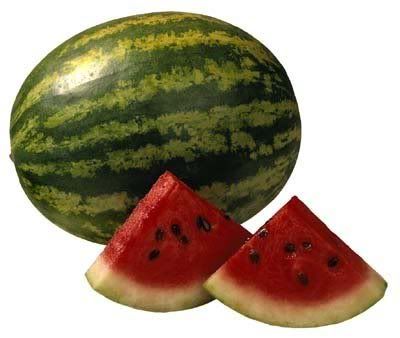
Watermelon, commonly known as “pakwan” in Tagalog, is probably native to Africa. It is mainly eaten as dessert fruit. The rind is made into preserves and pickles; the seeds are processed into butong pakwan. In 1982-83, the area planted to watermelon was 15,410 hectares with a total production of 75,650 metric tons of fruits; but area was reduced to 5,370 hectares in 1983-1984 and production went down to 57,000 metric tons of fruits. The demand for watermelon could go up as foreign markets like the USA offered to buy all the watermelon the country can produce.

VARIETIES

Varieties commonly grown in the Philippines are Valencia, Meak, Klondyke, northern Hybrid, Tender Sweet, honey Cream and Mallorca. Foreign varieties Accessions 193490 and 293964 from Africa; Accessions 183217 and 164539 from India; Festival Queen, Glory, Charleston Gray and Sugar Baby. Elevation – Watermelon is grown commercially in lowland areas after rice harvest. These provinces are Bataan, Bulacan, Pampanga, Tarlac, NUeva Ecija, Rizal, Batangas and Laguna. Months of planting – Planting season is from October to january. In some parts of the country, planting is done as early as August to produce an off-season crop which commands better market price. Continue reading “Watermelon Production -Pakwan Business”